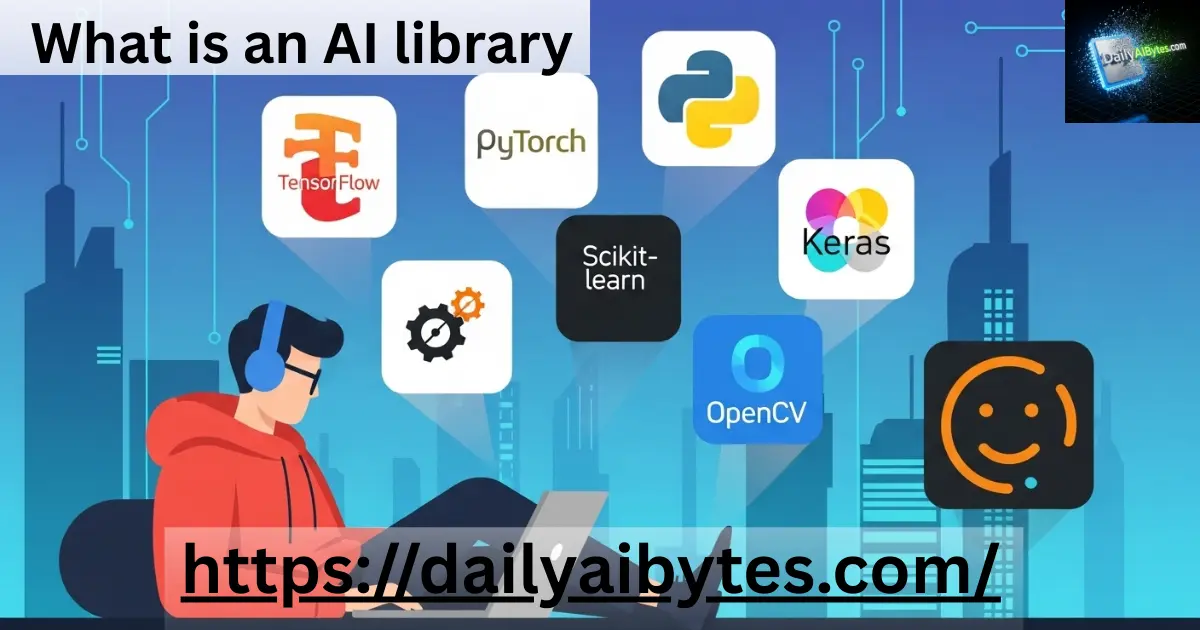
Artificial intelligence (AI) is a buzzword these days. However, building an AI project requires a lot of math, coding, and complex algorithms. Therefore, AI library are often used to simplify the process.
The General Meaning of a Library
A library refers to a collection of pre-built tools and code, so we don’t have to write the same code repeatedly in a project.
A Simple Introduction to an AI Library
An AI library is a package of code that contains pre-built algorithms and functions. Developers can use them to quickly and easily build AI applications.
Making AI development easier
Writing new code manually every time an AI project is launched could take years. With libraries, this task can be accomplished in a matter of days.
Saving time and effort
Pre-built functions eliminate the need for programmers to write code from scratch. This saves both time and effort.
Advantages of pre-built functions
Like image recognition code, text processing, machine learning models – they’re all built in. Just use them.

Key Benefits of AI Libraries
Fast and Easy Development
An AI project is hard to imagine without libraries. They speed up the development process 10 times.
Open-Source and Free Tools
Most AI libraries are open-source, meaning anyone can download and use them for free.
Scalability and Flexibility
You can start with small projects and scale them up to large-scale applications.
More Work with Less Coding
Some libraries can accomplish significant tasks with just 3-4 lines of code.
Examples of Popular AI Libraries
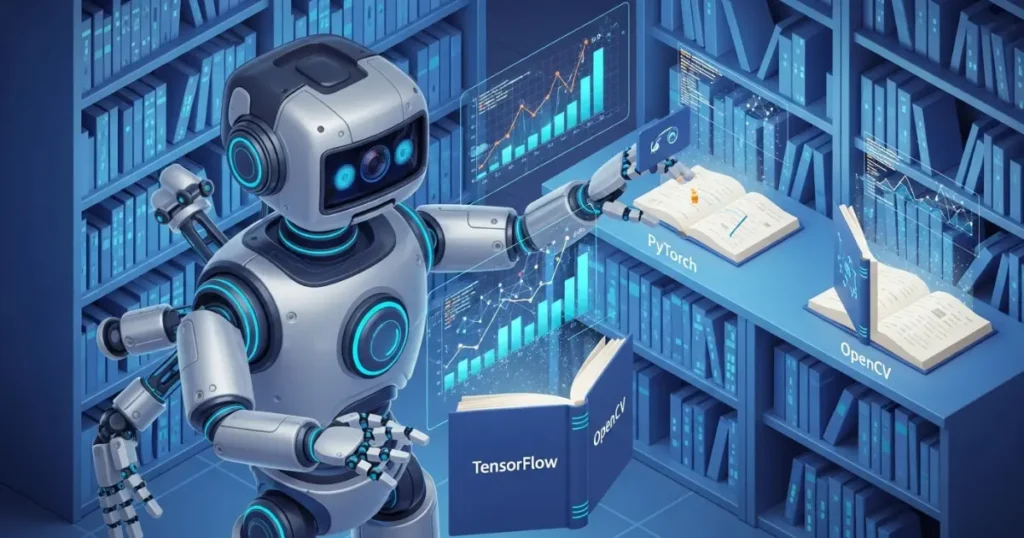
TensorFlow – Created by Google, for deep learning and machine learning.
PyTorch – Developed by Facebook, easy for research and prototyping.
Scikit-learn – Helpful for machine learning algorithms like classification and prediction.
Keras – Simple and user-friendly library, great for deep learning.
OpenCV – For image and video processing.
Hugging Face Transformers – Best for NLP, i.e., text and language models.
What are AI libraries used for?
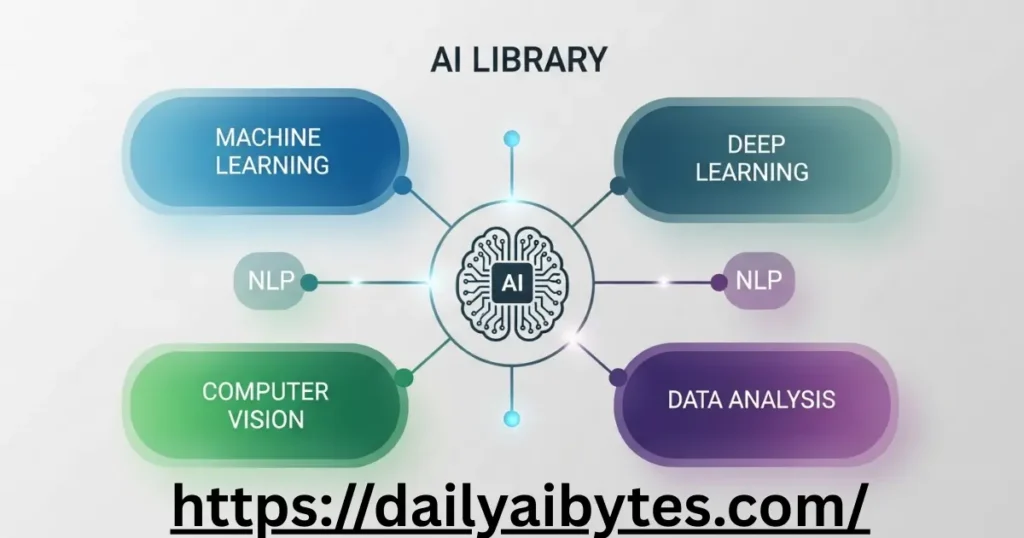
Building Machine Learning Models
Models that predict the future by learning from data are easily created.
Deep Learning and Neural Networks
TensorFlow and PyTorch are helpful for building networks that mimic the human brain.
Image Processing and Computer Vision
Object recognition from photos, face detection – OpenCV plays a major role.
Natural Language Processing (NLP)
Extracting meaning from text, building chatbots, language translation – Hugging Face is for this purpose.
Data Analysis and Prediction
Libraries are extremely useful for predicting the future in business and research.
How to use AI libraries?
Basic programming knowledge
Python is the most widely used language, so familiarity with it is essential.
Installing Libraries
In Python, libraries can be installed with just one command, such as:
Loading and Processing Data
The library makes it easy to load and process CSV or image files.
Training and Testing the Model
You can train the model using the built-in functions in the library.
Viewing Output and Results
You can easily view the model’s predictions in the results.
Easy Ways to Learn AI Libraries
Online Tutorials and Courses – There are plenty of free tutorials available on YouTube and course websites.
GitHub and Documentation – Every library has official documentation.
Start with small projects – like image classification or building a chatbot.
Conclusion
AI libraries simplify the world of AI development. They save programmers the time it takes to learn complex mathematics and coding. Whether you want to build a machine learning model, perform image processing, or create a chatbot, there’s a library for every task. If you want to learn AI, starting with libraries is the best way to start.

FAQs
Q1: What is an AI library?
An AI library is a set of pre-built code and tools that makes AI development easier.
Q2: What language is an AI library used in?
Most AI libraries are used in Python.
Q3: Are AI libraries free?
Yes, most libraries are open-source and free.
Q4: Which library is easiest for beginners?
Scikit-learn and Keras are the easiest to get started with.
Q5: What is the future of AI libraries?
The future of AI libraries is very bright as their demand is rapidly increasing across every industry.